My dear readers,
It's been far too long, I know.
Life's been keeping me very busy - but I haven't forgotten you! Countless times I've sat down with the fervid resolve to write, only for my inspirations to escape me, intimidated by the blank white page.
But though I am to some extent guilty of desertion, I cannot be accused of laziness, for my pen (or I should say keyboard) has been far from idle. I've been applying for scholarships, dabbling in the art of poetry writing, and have the makings of a short story.
Believe me, it was painful trying to choose only ONE topic for this post! I moved through four very diverse drafts before settling on this one (the equivalent to scribbling ideas down and accumulating a mountain of crumpled papers in the wastebasket!).
This post will also serve as a kind of farewell - not forever I trust, but only in expectation of what the near future holds!
In a few months time I will be leaving on an adventure - stepping out into the grand wide world!
Am I terrified? Yes! But ready and oh so excited!
"I guess they haven't removed the sheet yet. That's embarrassing." Was one man's reaction. "Oh I see, this is some experimental art project where we're all supposed to pretend this makes sense. Whatever."
In one word: unimpressed.
But upon closer inspection this hokey "art experiment" is revealed to be the creation of the highest imagination and craftsmanship. It is in fact a single, hand-carved piece of mahogany. The polished clock, the white sheet, the cinched rope - everything is wood!
As the same observer remarked, there was great risk involved in such a carving for the artist, "created a masterpiece that would likely go unnoticed."
What is beauty?
It's a question that has perplexed every generation and every age. Movies and magazines endeavor - and fail - to answer it; Aristotle and Socrates debated greatly on the subject.
But whether we disagree that "beauty is above the useful" or that something's "usefulness" defines its beauty, or whether we argue that beauty can be found through things or whether the things themselves can be beautiful, I think we can all agree that beauty is and that it is an important if not essential part of life - it is certainly one of the most misconstrued and warped, let alone misunderstood aspects of humanity.
We often say that beauty is in the eye of the beholder, and though this may be true in some respects, it doesn't account for true beauty which encompasses far more than we can behold, awes us with its mystery, and demands the use of every sense.
What about the things we deem "beautiful" without seeing?
Crystal caverns deep within the earth, never to be discovered, never to see the light of day? What about the flower that blooms in a sequestered vale? Is it any the less beautiful because it's not destined to be smelt or admired by man?

And music. We cannot see it, but we can hear it. The heavenly myriad of the orchestra, the jazzy rhythm of the band, the vibrato of a powerful voice - all are capable of stirring the soul! Our tastes in music may differ, but we all know what it means to be moved by it. We come away from a concert with flushed cheeks and bated breath, or from a sojourn with our songs and headphones with our hearts filled, a dance in our step... maybe even tears in our eyes, and pronounce what we hear as beautiful.
Beauty is embedded in the very foundations of the earth, and demands, not only the use of our emotions, but of our intellect.
When speaking of science and mathematical formulas Aristotle said, "the chief forms of beauty are order and symmetry and definiteness."and Marie Curie stated that, "a scientist in his laboratory is not only a technician: he is also a child placed before natural phenomena which impress him like a fairy tale."
The structure and poetry of language, whether in the written or spoken word can also be included in that "beauty of order," for its grammatical rules, and symmetric shapes and sounds give voice to beautiful thought.
And just as poetry and literature can be a dazzling domain of knowledge and adventure for those who choose to enter, true beauty is replete with realms of unexplored depth.
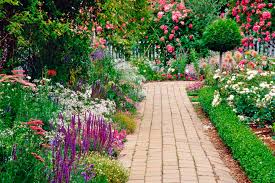
Take for example a garden. Its beauty is evident from its parameters, but its purpose is only fulfilled once we walk through it and smell the fresh, earthy perfume, touch the fragile petals, or rest in the dancing shade of its trees.
The great minds of ancient Greece discussed these things on a philosophical level and with a certain professional aloofness, but the overarching question of beauty impels, even haunts the very hearts of women. Aristotle wanted to find the answer, but when a woman asks or hears: What is beauty? she want to be the answer.
At its root this is a natural desire created by God, although our estrangement from him through sin can warp it into selfish ambition and as a weapon used by the world for our demise. But the universal truth remains: God has endowed Woman to be his special vessel of beauty.
Shakespeare penned:
With this passionate beauty comes the desire to be acknowledged, known and valued - all of humanity, men and women alike share this desire, yet just as with beauty, our concept of "being known" has become distorted...
We crave beauty. To be it. To see it. To have it. But we look in the wrong places: in the luring song of the Sirens, the flashing lights, the slick and the sensual, the struggle against time - in short, the places the world tells us to look. But these things are fickle and only skin deep, poor substitutes for true beauty.
Yet even the purest human creation and the most breathtaking view of nature will fall short of our lofty, longing expectations.
Almighty, Everlasting, Provider, Good Shepherd - these are words and names we associate with Him.
But beautiful?

Truly, the definition of beauty can be nothing short of God.
Mankind's deep desire to be known is an echo of the God who says, "you will seek me and find me, when you seek me with all your heart" (Jeremiah 29:13). He has revealed himself in Christ who conquered sin on our behalf - the same sin that warped beauty and desire - but still we must seek him in order to know him.
True beauty must be sought. It is not there for anyone's taking, nor is it easy to grasp. Hidden and precious, it takes, above all else, a quiet soul to appreciate. So I adjure you - myself just as much as you - to reflect and allow yourself the time to behold true beauty.
May God open our hearts to his unveiling.
A soul at rest in Christ is a beautiful thing. Gentle, not striving, yet breathtaking and full of strength. An epic on the grandest scale! Yes, there is risk involved, for the majority of the world will not recognize or acknowledge such beauty, but it is a masterpiece of greater, eternal value.
Know that you are a priceless work of art and have beauty to unveil... just like the clock standing patiently and unobtrusively in the gallery.
I can imagine the clock personified: Aware of its maker's intent and it's own purpose, it aches to reveal its beauty and mystery, but it is content to wait to be discovered by those who are worthy of its artistry.
Life's been keeping me very busy - but I haven't forgotten you! Countless times I've sat down with the fervid resolve to write, only for my inspirations to escape me, intimidated by the blank white page.
But though I am to some extent guilty of desertion, I cannot be accused of laziness, for my pen (or I should say keyboard) has been far from idle. I've been applying for scholarships, dabbling in the art of poetry writing, and have the makings of a short story.
Believe me, it was painful trying to choose only ONE topic for this post! I moved through four very diverse drafts before settling on this one (the equivalent to scribbling ideas down and accumulating a mountain of crumpled papers in the wastebasket!).
This post will also serve as a kind of farewell - not forever I trust, but only in expectation of what the near future holds!
In a few months time I will be leaving on an adventure - stepping out into the grand wide world!
Am I terrified? Yes! But ready and oh so excited!
~
In the Renwick Gallery in Washington, DC, there stands a clock draped in a sheet. Unobtrusive, yet awkwardly out of place, surrounded by noble sculptures and colourful paintings, its something you'd expect to find covered in dust and cobwebs in your grandparent's attic, not displayed in the centre of an art gallery."I guess they haven't removed the sheet yet. That's embarrassing." Was one man's reaction. "Oh I see, this is some experimental art project where we're all supposed to pretend this makes sense. Whatever."
In one word: unimpressed.
But upon closer inspection this hokey "art experiment" is revealed to be the creation of the highest imagination and craftsmanship. It is in fact a single, hand-carved piece of mahogany. The polished clock, the white sheet, the cinched rope - everything is wood!
As the same observer remarked, there was great risk involved in such a carving for the artist, "created a masterpiece that would likely go unnoticed."
What is beauty?
It's a question that has perplexed every generation and every age. Movies and magazines endeavor - and fail - to answer it; Aristotle and Socrates debated greatly on the subject.
But whether we disagree that "beauty is above the useful" or that something's "usefulness" defines its beauty, or whether we argue that beauty can be found through things or whether the things themselves can be beautiful, I think we can all agree that beauty is and that it is an important if not essential part of life - it is certainly one of the most misconstrued and warped, let alone misunderstood aspects of humanity.
We often say that beauty is in the eye of the beholder, and though this may be true in some respects, it doesn't account for true beauty which encompasses far more than we can behold, awes us with its mystery, and demands the use of every sense.
What about the things we deem "beautiful" without seeing?
Crystal caverns deep within the earth, never to be discovered, never to see the light of day? What about the flower that blooms in a sequestered vale? Is it any the less beautiful because it's not destined to be smelt or admired by man?

And music. We cannot see it, but we can hear it. The heavenly myriad of the orchestra, the jazzy rhythm of the band, the vibrato of a powerful voice - all are capable of stirring the soul! Our tastes in music may differ, but we all know what it means to be moved by it. We come away from a concert with flushed cheeks and bated breath, or from a sojourn with our songs and headphones with our hearts filled, a dance in our step... maybe even tears in our eyes, and pronounce what we hear as beautiful.
Beauty is embedded in the very foundations of the earth, and demands, not only the use of our emotions, but of our intellect.
When speaking of science and mathematical formulas Aristotle said, "the chief forms of beauty are order and symmetry and definiteness."and Marie Curie stated that, "a scientist in his laboratory is not only a technician: he is also a child placed before natural phenomena which impress him like a fairy tale."
The structure and poetry of language, whether in the written or spoken word can also be included in that "beauty of order," for its grammatical rules, and symmetric shapes and sounds give voice to beautiful thought.
And just as poetry and literature can be a dazzling domain of knowledge and adventure for those who choose to enter, true beauty is replete with realms of unexplored depth.
Take for example a garden. Its beauty is evident from its parameters, but its purpose is only fulfilled once we walk through it and smell the fresh, earthy perfume, touch the fragile petals, or rest in the dancing shade of its trees.
The great minds of ancient Greece discussed these things on a philosophical level and with a certain professional aloofness, but the overarching question of beauty impels, even haunts the very hearts of women. Aristotle wanted to find the answer, but when a woman asks or hears: What is beauty? she want to be the answer.
At its root this is a natural desire created by God, although our estrangement from him through sin can warp it into selfish ambition and as a weapon used by the world for our demise. But the universal truth remains: God has endowed Woman to be his special vessel of beauty.
Shakespeare penned:
From women’s eyes this doctrine I derive:And the poet, William Blake, spoke reverently of the woman's body as "too much of eternity for the eyes of man."
They are the ground, the books, the academes,
From whence doth spring the true Promethean fire...
For where is any author in the world
Teaches such beauty as a woman’s eye?"
(Love's Labour Lost)
With this passionate beauty comes the desire to be acknowledged, known and valued - all of humanity, men and women alike share this desire, yet just as with beauty, our concept of "being known" has become distorted...
We crave beauty. To be it. To see it. To have it. But we look in the wrong places: in the luring song of the Sirens, the flashing lights, the slick and the sensual, the struggle against time - in short, the places the world tells us to look. But these things are fickle and only skin deep, poor substitutes for true beauty.
Yet even the purest human creation and the most breathtaking view of nature will fall short of our lofty, longing expectations.
“The books or the music in which we thought the beauty was located will betray us if we trust in them; it was not in them, it only came through them,and what came through them was longing. These things—the beauty, the memory of our own past—are good images of what we really desire; but if they are mistaken for the thing itself they turn into dumb idols,breaking the hearts of their worshipers" (The Weight of Glory, C. S. Lewis).I think we often overlook the sheer beauty of God.
Almighty, Everlasting, Provider, Good Shepherd - these are words and names we associate with Him.
But beautiful?
"Over the heads of the living creatures there was the likeness of an expanse, shining like awe-inspiring crystal, spread out above their heads. And under the expanse their wings were stretched out straight, one toward another... And when they went, I heard the sound of their wings like the sound of many waters, like the sound of the Almighty, a sound of tumult like the sound of an army... there was the likeness of a throne, in appearance like sapphire ... I saw as it were the appearance of fire, and there was brightness around him. Like the appearance of the bow that is in the cloud on the day of rain, so was the appearance of the brightness all around. Such was the appearance of the likeness of the glory of the Lord. And when I saw it, I fell on my face, and I heard the voice of one speaking" (Ezekiel 1:22-28).In order to describe his vision, Ezekiel repeatedly uses the words "likeness" and "appearance," as if he is wracking his finite mind for words to express the overwhelming glory of God in the heavenly realms. Ezekiel's efforts and descriptions are incredibly hard for our imaginations to grasp, but still they are something to ponder... Like the sound of rushing waters or a great army, sapphire, fire, brightness like a rainbow...

Truly, the definition of beauty can be nothing short of God.
Mankind's deep desire to be known is an echo of the God who says, "you will seek me and find me, when you seek me with all your heart" (Jeremiah 29:13). He has revealed himself in Christ who conquered sin on our behalf - the same sin that warped beauty and desire - but still we must seek him in order to know him.
True beauty must be sought. It is not there for anyone's taking, nor is it easy to grasp. Hidden and precious, it takes, above all else, a quiet soul to appreciate. So I adjure you - myself just as much as you - to reflect and allow yourself the time to behold true beauty.
May God open our hearts to his unveiling.
A soul at rest in Christ is a beautiful thing. Gentle, not striving, yet breathtaking and full of strength. An epic on the grandest scale! Yes, there is risk involved, for the majority of the world will not recognize or acknowledge such beauty, but it is a masterpiece of greater, eternal value.
Know that you are a priceless work of art and have beauty to unveil... just like the clock standing patiently and unobtrusively in the gallery.
I can imagine the clock personified: Aware of its maker's intent and it's own purpose, it aches to reveal its beauty and mystery, but it is content to wait to be discovered by those who are worthy of its artistry.
"It is the glory of God to conceal a matter; to search out a matter is the glory of kings" Proverbs 25:2.

Resources:
Rodgers, Joshua. Where Have All the Beautiful Women Gone? http://www.boundless.org/relationships/2015/where-have-all-the-beautiful-women-gone?utm_source=fb_focus&utm_medium=social&utm_campaign=blog_beautifulwomengone_apr_12
Palmarium Magazine. Aristotle and Socrates on Beauty. http://www.palmarium-magazine.com/w1-aristotleandsocratesonbeauty.html
Eldredge, John and Stasi. Captivating. 2005. Print.